


Why importers actually can’t do without the six steps of lead follow-up… (part 1)
30 juli 2026, PaulWhy first-party leads deserve so much attention
In my day-to-day practice I often come into contact with importers who ask questions about how they can get more out of their online leads. Rightly so, too. At many importers, large and small, the overall investment in marketing is large relative to the budget. Ultimately, all that marketing money should lead to visits to the website, a logical first step for every interested party.
Inquiries that result from this, the so-called first-party leads, are of high quality and relatively expensive to acquire when you look at the CPL. What’s more, they have to be distributed across the network, the lead time is long, certainly given the difference from a used-car lead, and the outcome is often uncertain or can even be called mediocre.
In our research at the CX Awards last year, the results in the area of lead follow-up were dismal across the board. You could see that the winner, Ford Netherlands in this case, does have a vision and an idea, and also executes it in order to at least stop the leakage that leads give. Setting up a BDC, external or internal, is then often a solution that we at CARMEN Automotive BDC facilitate for various importers.
Why a hybrid model is the best solution
Personally, I would opt for the hybrid model, with the six steps in lead follow-up as the foundation and the combination with the salespeople at dealer businesses and the BDC as a back-up.
We developed the six-step method in 2018, and it follows a simple process that at the same time fits the present day and the way today’s customer acts.
Today’s customer has fundamentally changed
Characteristic 1
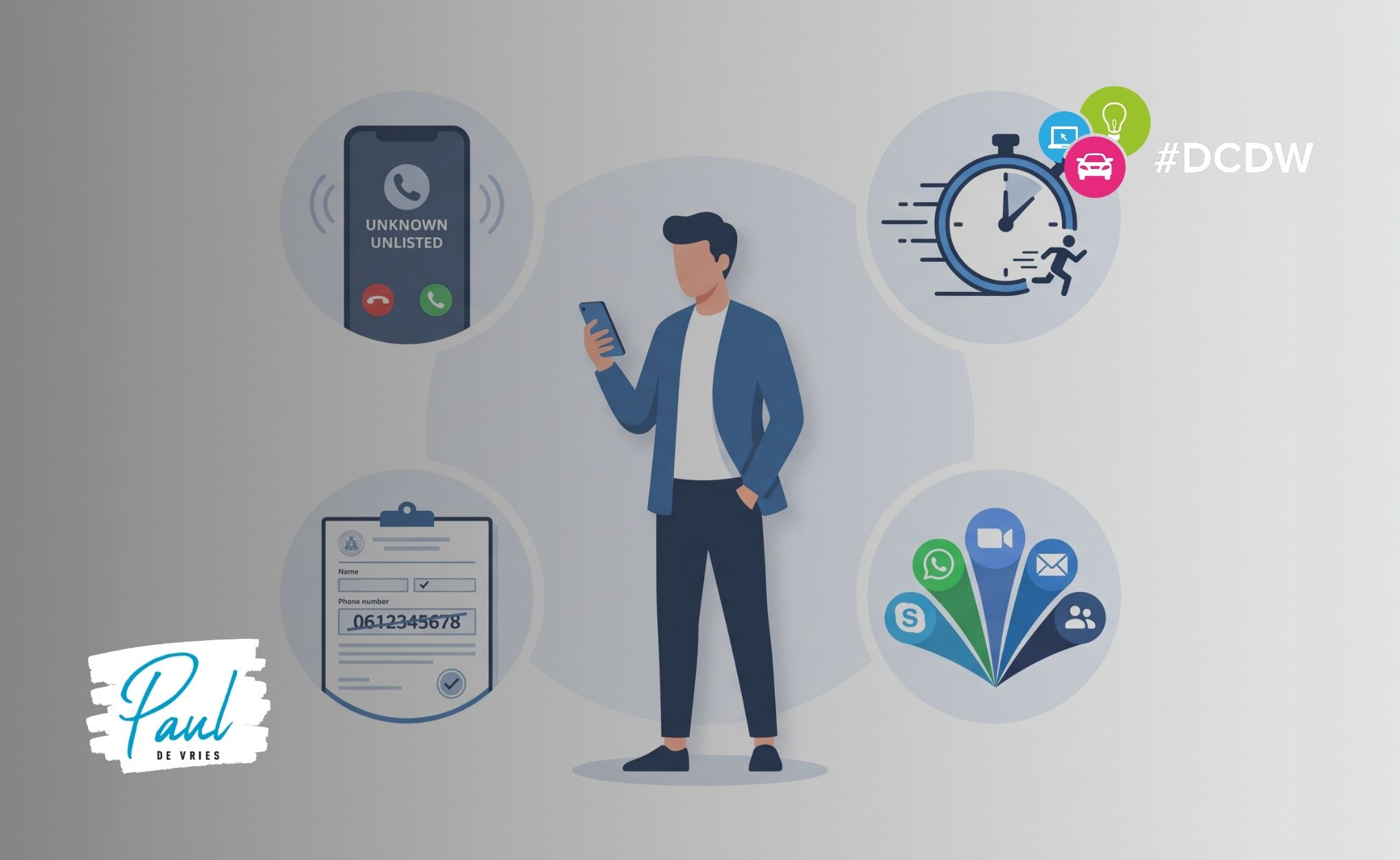
Always online, but not reachable. In other words, everyone has a smartphone, some even take it to the toilet, sleep with it or whatever. We’ve never been so reachable, but if someone calls with a number you don’t recognize — and I’m not even talking about an anonymous number yet — then people no longer answer so readily, unless you’re expecting the call. An inquiry on a website that results in a call within five minutes is, according to our Calldrip data, answered in more than 70% of cases. If you call after 15 minutes, this percentage has already dropped to below 40%.
Characteristic 2
The customer, and therefore all of us, no longer have any patience. Everything has to be fast. That means that if I want information about a car and have to fill in a form for it, the question is: how long am I then willing to wait? Not long, that is.
Characteristic 3
Is that we hide our data. A phone number that you’re obliged to fill in, you fill in as 0612345678, and the salesperson then often thinks it’s a bad lead, whereas the customer just doesn’t want to be called for a moment, but does want to email. And that actually makes the lead better…
Characteristic 4
The last characteristic is that we use other means of communication. Yes, calling is primarily the best way to make contact and make an appointment, the next step in conversion. But nowadays you can do much more, such as video calling, WhatsApping, sending a video, approaching social media inboxes and, yes, also emailing. The customer of ‘the past’ had only a landline number and an email address with xs4all.nl, and now there are more than ten possibilities for reaching the customer.
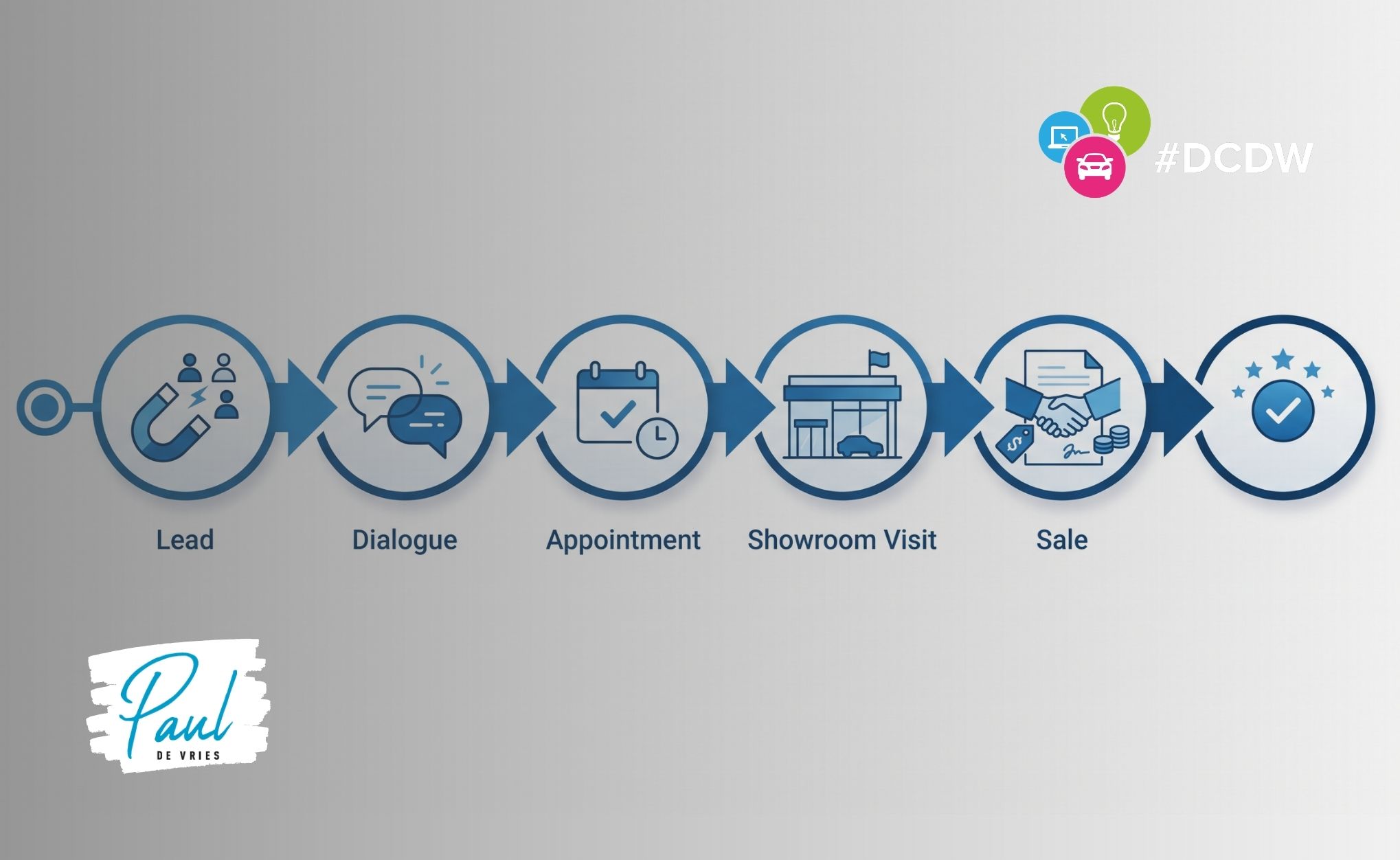
Now that we’ve dealt with the characteristics, we just need to know, as an importer too, where we are in the funnel. After all, you certainly don’t always need more leads, but you do need more sales. To get more sales, you need more appointments that actually take place, and so you have to convert more leads into dialogues, which lead to appointments where customers actually show up.
And yes, with new cars that’s harder. The lead time is longer, but that’s exactly why a process is necessary too!
The 60% rule: where profit or loss arises
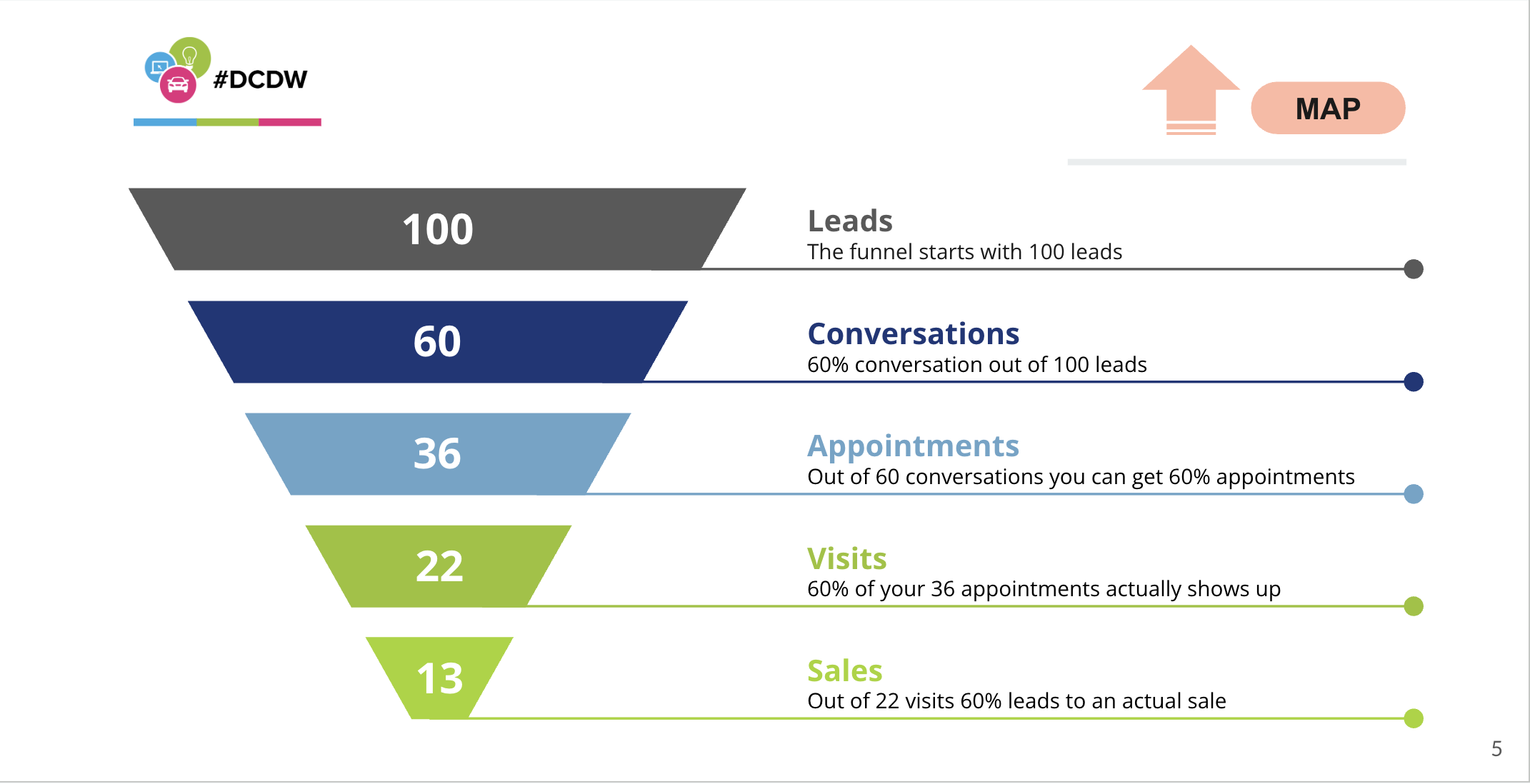
That funnel is the 60% rule and is essential for knowing where the opportunities leak away. You start with 100 leads and you expect all 100 leads to be approached. The conversion that follows is the dialogue. You’d like to be in contact with those people, by phone, via WhatsApp, it doesn’t matter, as long as there’s contact. The best way is, of course, by phone and fast. Characteristics 1 and 2 show that speed is decisive. Of the 100, you need at least 60 dialogues: customers, in other words, that you actually speak to.
From dialogue to appointment
Once you have that contact, the next conversion follows, and that’s selling the appointment. This should be able to happen in 60% of cases. So you name the advantages of making an appointment: why it’s in the consumer’s best interest and what they can and may expect. That’s therefore 36 appointments, and with that the next conversion.
From appointment to showroom visit
The conversion that follows is there to ensure that the consumer actually comes. The longer it takes until the appointment, the greater the chance that they won’t come. Here, too, you need 60%, which is 22. This is also often the challenge with an external or internal BDC. They’re stronger than salespeople at obtaining the dialogues and making the appointment, but the handover to an actual appointment where the customer shows up is much more difficult, because the salesperson who has to confirm the appointment is not yet the ‘owner’ of the customer. There’s not yet a bond on both sides, and that simply makes it harder. Not because I say so, but the data tell me so every day…
Why the first three steps make the difference
The final conversion is ultimately sales. 60% of the 22 customers who show up should ultimately buy. And that’s 13 sales. At the final step, I often see no issue. Most salespeople, dealers and importers do reach those numbers. The leakage is in the first three layers. Not 100% is followed up, and with that, due to the absence of a process, the 60% dialogues aren’t reached. And because we train salespeople too little in phone conversations with the goal of making an appointment, we don’t reach that either. After that, things go reasonably to well.
This is often also the reason why people consider a BDC. The first three steps in the funnel then come out 100% right, but the extra costs this entails call for a higher conversion than the eventual 13%, in order to justify the investment. That’s precisely where the six steps are going to help. Follow-up by car salespeople at the branches and a BDC as a back-up: more about that next time in part 2.