


Why most leads are lost before the conversation begins
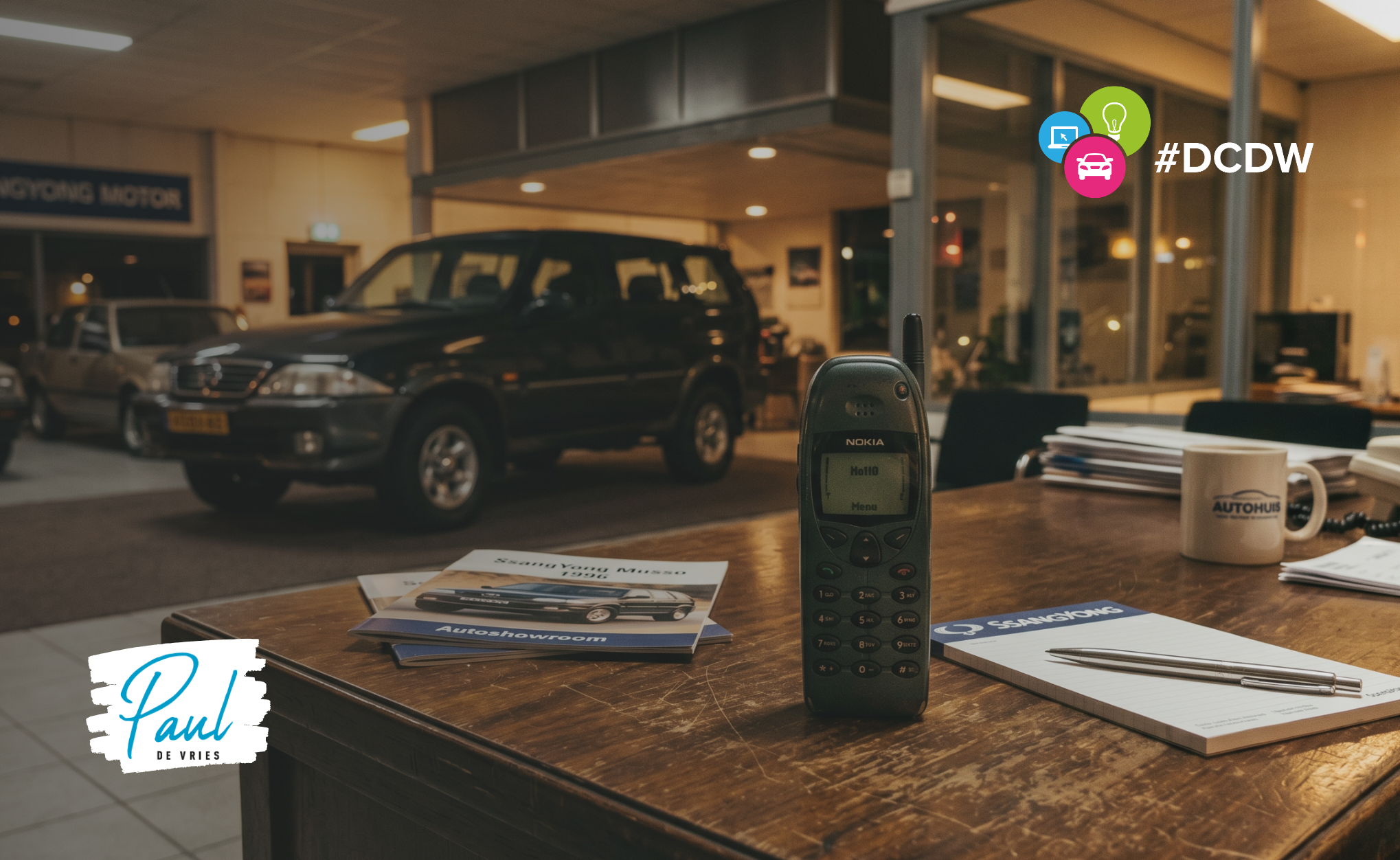
16 juli 2026, PaulAn inquiry on the SsangYong Apeldoorn website resulted in a text message on a Nokia 6110 with the salesperson (so with me). No CRM, no automatic follow-up system, no manual. But there was the reflex to respond immediately. Call quickly, personal contact, a clear next step with an appointment. That was 27 years ago.
And yet the pattern today is the same. A lead comes in. No one calls. Or too late. Or a standard email goes out saying “Thank you for your interest.” And then it stays quiet. The salesperson doesn’t understand why no appointment comes out of it. The manager doesn’t understand why the conversion is so low. The owner wonders why so much money goes to portals without it yielding anything.
The answer is always the same: “It’s not the quality of the lead.” Because it’s never the quality of the lead; it’s always the quality of the follow-up.
Recognizable patterns, visible every day
After 25 years in online automotive, a number of patterns keep coming back time and again. At large groups and at one-person businesses, in the Netherlands and far beyond. Salespeople who hang up as soon as they hear a voicemail. No message, no WhatsApp, nothing. The customer sees an unknown number on the screen and never calls back. And the opportunity is gone.
Salespeople who stop after two call attempts. The lead disappears into the CRM and is never touched again. Even though that customer did make an inquiry, did show interest, did do something.
Salespeople who send a quote without calling first. A neat PDF with prices and options. And then they wait. And then they hear nothing more. Because the customer has laid that quote next to three other quotes and simply chosen the lowest price. Whereas a single phone call could have made the difference.
Salespeople who treat a brochure request as an endpoint. Send a PDF. Done. And on to the next lead, whereas a brochure request is one of the clearest buying signals you can get. Someone is orienting themselves. Someone is comparing. Someone is thinking about a next car. And then the car business sends a PDF and waits.
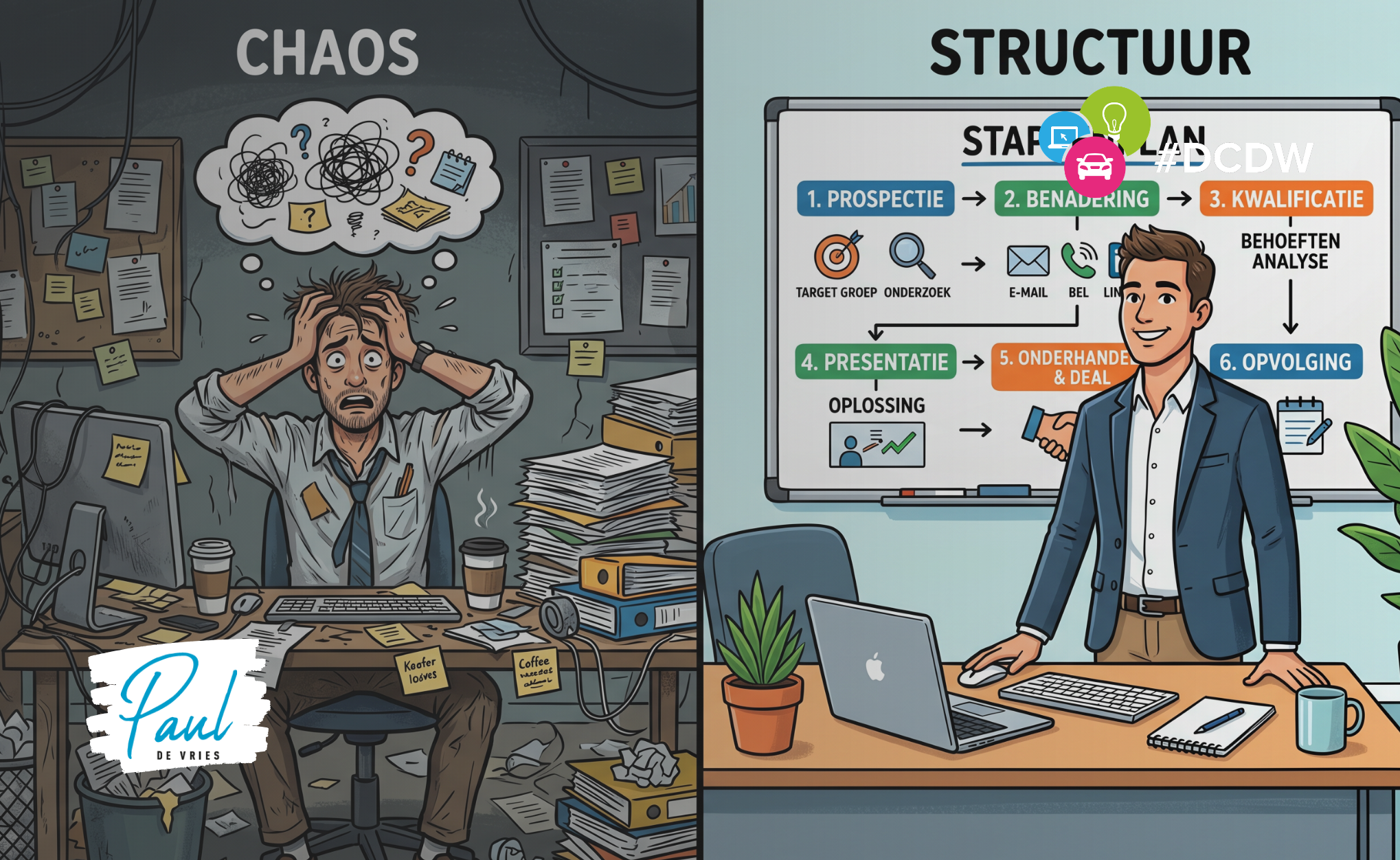
They’re not lazy salespeople. They’re salespeople without a system. Without a standard. Without a clear answer to the question: what exactly do you do now, step by step, when a lead comes in?
The mistakes that cost the most
The most expensive mistakes in car sales are not the mistakes made in the showroom. They’re the mistakes made before the customer walks into the showroom. A lead that isn’t followed up costs money. Not only the money paid for the advertisement or the portal. But also the margin on the car that wasn’t sold or the trade-in that wasn’t secured. The financing that wasn’t closed. The customer who could have bought from you for ten years, but is now standing at the competitor’s.
Then we’re no longer talking about small amounts. And yet every day, at every car business in the Netherlands, a portion of the opportunities is thrown away. Not on purpose. But through a lack of structure.
150 videos. Five parts. One goal.
The Online Lead Specialist course consists of 150 videos divided across five parts. Each part builds on the previous one. From the basics of online lead follow-up to the most complex real-world situations.
The first parts cover the fundamentals. What is an online lead? What are the six rules of online lead follow-up? What does a good follow-up process look like? How do you write an email that gets read? How do you leave a voicemail that gets called back?
The later parts go deeper. How do you conduct a wow call? How do you turn a brochure request into a test drive? How do you deal with “I need to discuss it with my partner”? How do you confirm an appointment so that the customer actually comes? How do you handle a trade-in question without pinning yourself down to an amount you can’t deliver on later?
The fifth part is entirely devoted to practical cases. Situations that every salesperson recognizes. No fictional examples, but patterns that occur daily. With an analysis of what goes wrong, why it goes wrong and what could be done differently.
Who is this course for?
The course is for salespeople who want to get more out of the leads they already have. Who know there’s more in it, but don’t know exactly where it goes wrong. Who work hard every day, but have the feeling that they’re leaving opportunities on the table.
For managers who want their team to perform consistently. Who don’t want to have the same conversations every week about why no appointments are being made. Who want to set a standard and also be able to enforce that standard.
The course is also for owners who invest in portals, in advertisements, in a nice website and who want to know whether that investment actually yields anything. Who understand that the ROI of online marketing stands or falls with the quality of the follow-up.
The course is not intended for people looking for a quick trick. There are no tricks. What there is: a way of working. A process. A way of thinking that you can train, measure and improve.
After completing the course, you’re a certified Online Lead Specialist. That certificate is not a sticker. It’s proof that you understand the material and can apply it. That you know what you’re doing when a lead comes in. And that you keep control of the conversation, from the first point of contact to the appointment in the showroom.
Online first, offline second
As a dealer, as a car business, you can only win offline if you first win online. The showroom is still the place where the deal is closed. But the road to that showroom begins online. With an inquiry. With a question. With a signal that the customer gives.
The difference between a salesperson who picks up that signal and a salesperson who leaves it lying there is not talent. It’s not aptitude. It’s a system. A habit. A reflex you can train.
And that’s what you want, because leads aren’t free. They cost time, money and energy to generate. The only question is: what do you do with them when they come in?